
HomeOvarian cysts
Ovarian cysts
Diagnostic & Treatment

What are ovarian cysts (ovarian cysts)? Most important: 1. Most women have an ovarian cyst at least once in their life, and they are mostly painless, do not cause symptoms, and were discovered during a routine pelvic examination. 2. Symptoms of an ovarian cyst can be: nausea, vomiting, bloating, pain in the lower abdomen and pain during sexual intercourse.. 3. In rare cases, an ovarian cyst can cause serious problems, so it is best to check with a doctor. Ovaries are part of the female reproductive system. They are located in the lower abdomen on both sides of the uterus. Women have two ovaries that produce eggs, as well as the hormones estrogen and progesterone. Sometimes, a fluid-filled mass called a cyst develops in the ovary. Many women will develop at least one cyst during their lifetime. In most cases, cysts are painless and do not cause symptoms. Division of ovarian cysts There are different types of ovarian cysts, such as dermoid cysts and endometriotic cysts (chocolate cysts). However, functional cysts are the most common type. These two types of functional cysts are divided into follicular cysts and corpus luteum cysts (Lutein cysts). Follicular cysts (Persistent follicle or Water cyst on the ovary) 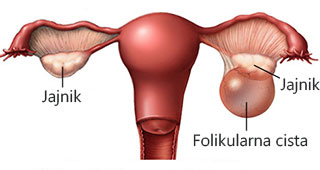 During menstruation cycle of a woman, an egg grows in one of the follicles located in the ovaries. In most cases, the follicle ruptures during ovulation and releases the egg. But if the follicle does not rupture, the fluid inside the follicle can form an ovarian cyst. Cyst of the corpus luteum (Lutein cyst or Corpus Luteum cyst) The follicle is resorbed after the egg is released. But if the follicle that released the egg is not resorbed and the follicle opening closes, extra fluid can collect and this accumulation of fluid causes the formation of a luteal cyst. Sometimes a blood vessel can burst and blood can "pour out" into the cyst when it is called a hemorrhagic cyst. Other types of ovarian cysts include: Dermoid cyst (dermoid or ovarian teratoma): A cystic growth on the ovary that may contain hair, fat, and various other tissues. Ovarian cystadenoma (Cystadenoma ovarii): a cyst that has its own capsule inside which fluid accumulates (they can also develop on the outer surface of the ovary). Endometriotic cyst (chocolate cyst) - The endometrium (uterine lining) which normally grows inside the uterus, can develop outside the uterus and if found in the ovary, form a chocolate cyst. Some women have a condition called polycystic ovary syndrome. This means, among other things, that the ovaries contain a lot of small cysts, which is why they can be enlarged. Ovarian cyst symptoms
  Most often, ovarian cysts do not cause any symptoms. However, symptoms may appear as the cyst grows. Symptoms may include: Abdominal bloating Painful bowel movements Pelvic pain before or during menstrual cycle Painful intercourse Lower back or thigh pain Breast tenderness Nausea and vomiting Serious symptoms of ovarian cysts that require immediate medical attention include: Severe or sharp pelvic pain Fever Weakness or dizziness Fast breathing These symptoms may indicate cyst rupture (cyst bursting) or ovarian torsion (twisting of the ovary).. Both complications can have serious consequences if not intervened in time.
  Complications of ovarian cysts Most ovarian cysts are benign and will resolve naturally on their own without treatment. These cysts cause little or no symptoms. In rare cases, your gynecologist may detect a cystic formation on the ovary that may cause suspicion of a malignant process during a routine examination. Ovarian torsion is another rare complication of ovarian cysts. This happens when a large cyst causes the ovary to turn, twist, or move from its original position. The circulation (blood flow) of the ovary is disturbed and, if left untreated, can lead to damage or death of the ovarian tissue. Although rare, operations for twisted ovaries account for nearly 3 percent of all emergency gynecologic surgeries. Rupture of cysts, which also occur rarely, can cause severe pain and internal bleeding. This complication increases the risk of infection and can be life-threatening if left untreated. Diagnosing an ovarian cyst
  Your gynecologist may detect an ovarian cyst during a routine pelvic exam. An ultrasound scan (ultrasound) uses high-frequency sound waves to create an image of your internal organs. An ultrasound examination will help determine the size, location, shape and composition of the cyst (solid or fluid-filled). Other diagnostic methods used to diagnose ovarian cysts are: CT: used to produce cross-sectional images of internal organs. MRI: uses magnetic fields to produce a detailed picture of internal organs Because most cysts will disappear after a few weeks or months, your doctor probably can't recommend a treatment plan right away. Instead, he may repeat the ultrasound in a few weeks or months to check the condition. If there are no changes or if the cyst increases in size, your doctor may order additional tests to rule out other causes of the cyst. They include: Pregnancy test: to make sure you are not pregnant. Hormonal status: to check your hormone status - such as high levels of estrogen or progesterone. Tumor markersi: screening for ovarian cancer Treatment
  Your doctor may recommend surgical treatment or removal of the cyst if it does not go away on its own. if it continues to grow. If you have any questions, feel free to ask us - CONTACT Contraceptive pills If ovarian cysts occur frequently, your doctor may recommend oral contraceptive pills to stop ovulation and prevent the development of new cysts. Oral contraceptives may reduce the risk of ovarian cancer. The risk of ovarian cancer is higher in postmenopausal women. Laparoscopy - Laparoscopic Cystectomy If your cyst is unquestionably cancerous, an endoscopy gynecologist can perform a laparoscopy to surgically remove the cyst. The procedure involves your doctor making a small incision near the belly button and then using small instruments to remove the cysts. Dermoid cyst - laparoscopy - cyst removal laparoscopically. Laparotomy - Classic abdominal surgery If you have a large cyst that cannot be removed laparoscopically, your doctor can surgically remove the cysts through an incision in your abdomen. He will conduct a biopsy, and if it is determined that the cyst is not benign, the operation can expand it. Prevention Some ovarian cysts cannot be prevented. However, routine gynecological examinations can detect ovarian cysts at an early stage. Ovarian cancer symptoms can mimic those of a benign ovarian cyst. That's why it's important to visit your gynecologist to get an accurate diagnosis. Alert your doctor to symptoms that may indicate a problem, such as: Changes in your menstrual cycle Pelvic pain Loss of appetite Unexplained weight loss Abdominal growth. What are the long-term prospects? In premenopausal women, the prognosis of ovarian cysts is good. Most cysts disappear within a few months. Recurrent ovarian cysts can occur in premenopausal women and women with hormone imbalances. If left untreated, some cysts can reduce fertility. This is true for endometriotic cysts and polycystic ovary syndrome. To improve fertility, your doctor may remove the cysts. Functional cysts do not affect fertility. Postmenopausal Your doctor may recommend cyst removal surgery to examine any cysts or growths that develop on the ovaries after menopause. This is because the risk of developing a cancerous cyst or ovarian cancer increases after menopause. Some doctors will recommend that the cyst be removed if it is larger than 5 cm in diameter. If you have any questions, feel free to ask us - CONTACT
During menstruation cycle of a woman, an egg grows in one of the follicles located in the ovaries. In most cases, the follicle ruptures during ovulation and releases the egg. But if the follicle does not rupture, the fluid inside the follicle can form an ovarian cyst. Cyst of the corpus luteum (Lutein cyst or Corpus Luteum cyst) The follicle is resorbed after the egg is released. But if the follicle that released the egg is not resorbed and the follicle opening closes, extra fluid can collect and this accumulation of fluid causes the formation of a luteal cyst. Sometimes a blood vessel can burst and blood can "pour out" into the cyst when it is called a hemorrhagic cyst. Other types of ovarian cysts include: Dermoid cyst (dermoid or ovarian teratoma): A cystic growth on the ovary that may contain hair, fat, and various other tissues. Ovarian cystadenoma (Cystadenoma ovarii): a cyst that has its own capsule inside which fluid accumulates (they can also develop on the outer surface of the ovary). Endometriotic cyst (chocolate cyst) - The endometrium (uterine lining) which normally grows inside the uterus, can develop outside the uterus and if found in the ovary, form a chocolate cyst. Some women have a condition called polycystic ovary syndrome. This means, among other things, that the ovaries contain a lot of small cysts, which is why they can be enlarged. Ovarian cyst symptoms Most often, ovarian cysts do not cause any symptoms. However, symptoms may appear as the cyst grows. Symptoms may include: Abdominal bloating Painful bowel movements Pelvic pain before or during menstrual cycle Painful intercourse Lower back or thigh pain Breast tenderness Nausea and vomiting Serious symptoms of ovarian cysts that require immediate medical attention include: Severe or sharp pelvic pain Fever Weakness or dizziness Fast breathing These symptoms may indicate cyst rupture (cyst bursting) or ovarian torsion (twisting of the ovary).. Both complications can have serious consequences if not intervened in time. Complications of ovarian cysts Most ovarian cysts are benign and will resolve naturally on their own without treatment. These cysts cause little or no symptoms. In rare cases, your gynecologist may detect a cystic formation on the ovary that may cause suspicion of a malignant process during a routine examination. Ovarian torsion is another rare complication of ovarian cysts. This happens when a large cyst causes the ovary to turn, twist, or move from its original position. The circulation (blood flow) of the ovary is disturbed and, if left untreated, can lead to damage or death of the ovarian tissue. Although rare, operations for twisted ovaries account for nearly 3 percent of all emergency gynecologic surgeries. Rupture of cysts, which also occur rarely, can cause severe pain and internal bleeding. This complication increases the risk of infection and can be life-threatening if left untreated. Diagnosing an ovarian cyst Your gynecologist may detect an ovarian cyst during a routine pelvic exam. An ultrasound scan (ultrasound) uses high-frequency sound waves to create an image of your internal organs. An ultrasound examination will help determine the size, location, shape and composition of the cyst (solid or fluid-filled). Other diagnostic methods used to diagnose ovarian cysts are: CT: used to produce cross-sectional images of internal organs. MRI: uses magnetic fields to produce a detailed picture of internal organs Because most cysts will disappear after a few weeks or months, your doctor probably can't recommend a treatment plan right away. Instead, he may repeat the ultrasound in a few weeks or months to check the condition. If there are no changes or if the cyst increases in size, your doctor may order additional tests to rule out other causes of the cyst. They include: Pregnancy test: to make sure you are not pregnant. Hormonal status: to check your hormone status - such as high levels of estrogen or progesterone. Tumor markersi: screening for ovarian cancer Treatment Your doctor may recommend surgical treatment or removal of the cyst if it does not go away on its own. if it continues to grow. If you have any questions, feel free to ask us - CONTACT Contraceptive pills If ovarian cysts occur frequently, your doctor may recommend oral contraceptive pills to stop ovulation and prevent the development of new cysts. Oral contraceptives may reduce the risk of ovarian cancer. The risk of ovarian cancer is higher in postmenopausal women. Laparoscopy - Laparoscopic Cystectomy If your cyst is unquestionably cancerous, an endoscopy gynecologist can perform a laparoscopy to surgically remove the cyst. The procedure involves your doctor making a small incision near the belly button and then using small instruments to remove the cysts. Dermoid cyst - laparoscopy - cyst removal laparoscopically. Laparotomy - Classic abdominal surgery If you have a large cyst that cannot be removed laparoscopically, your doctor can surgically remove the cysts through an incision in your abdomen. He will conduct a biopsy, and if it is determined that the cyst is not benign, the operation can expand it. Prevention Some ovarian cysts cannot be prevented. However, routine gynecological examinations can detect ovarian cysts at an early stage. Ovarian cancer symptoms can mimic those of a benign ovarian cyst. That's why it's important to visit your gynecologist to get an accurate diagnosis. Alert your doctor to symptoms that may indicate a problem, such as: Changes in your menstrual cycle Pelvic pain Loss of appetite Unexplained weight loss Abdominal growth. What are the long-term prospects? In premenopausal women, the prognosis of ovarian cysts is good. Most cysts disappear within a few months. Recurrent ovarian cysts can occur in premenopausal women and women with hormone imbalances. If left untreated, some cysts can reduce fertility. This is true for endometriotic cysts and polycystic ovary syndrome. To improve fertility, your doctor may remove the cysts. Functional cysts do not affect fertility. Postmenopausal Your doctor may recommend cyst removal surgery to examine any cysts or growths that develop on the ovaries after menopause. This is because the risk of developing a cancerous cyst or ovarian cancer increases after menopause. Some doctors will recommend that the cyst be removed if it is larger than 5 cm in diameter. If you have any questions, feel free to ask us - CONTACTComprehensive approach
Confidential evaluations, advanced screening, and tailored treatment plans designed specifically for your well-being.
Specialist-led care
Your healthcare is overseen by continuously verified, highly experienced clinicians guiding you step by step.
Fast, clear insights
Receive clear results promptly along with customized next steps and straightforward guidance on your health.